'In fact, when monetary policy has been deployed, it does not distinguish between types of shocks. It goes straight for the kill.'

The trophy is supposed to be the full stop to a tournament, not another comma in an India-Pakistan controversy, points out K R Nayar.

Analysts predict that developments in the West Asia conflict, crude oil prices, and upcoming US inflation data will be the primary factors influencing the Indian stock market next week, alongside foreign investor activity and global market trends.

The BCCI has clarified that the Indian women's cricket team's decision not to accept the Asia Cup trophy from Asian Cricket Council's Pakistani chief Mohsin Naqvi was a "conscious, institutional" call, made due to prevailing circumstances and national sentiments.

India has secured a spot among the top 10 leading emerging-market performers in artificial intelligence (AI) readiness, with private investment in AI more than tripling to USD 4.1 billion in 2025, according to a new World Bank report.
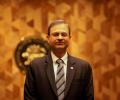
The Reserve Bank of India's Monetary Policy Committee (MPC) has commenced its three-day meeting, with a majority of economists and bankers anticipating a 25 basis point rate hike to counter escalating inflation risks, particularly from West Asia conflicts.

India's wholesale price-based inflation surged to 11.39 per cent in September, up from 9.92 per cent in August, primarily driven by increasing prices of food, manufactured items, and fuel and power.

RBI Governor Sanjay Malhotra stated that the central bank is closely monitoring whether the supply shock from the West Asia conflict will lead to a generalised price rise, potentially necessitating monetary policy action.

Indian benchmark indices, Sensex and Nifty, closed almost flat in choppy trade as investors remained cautious due to ongoing uncertainty in West Asia, relentless foreign fund outflows, and anticipation of the RBI's monetary policy decision.

Gold and silver prices are anticipated to maintain a positive trajectory in the coming week, with market volatility expected to remain high due to ongoing developments in West Asia and upcoming global economic data, particularly the Federal Reserve's FOMC meeting minutes.

Analysts predict that the Reserve Bank of India's interest rate decision, the evolving situation in West Asia involving the US-Iran conflict, and crude oil prices will be the primary factors influencing investor sentiment in the Indian stock market this week.

India's exports saw a significant 23 per cent increase, reaching USD 44.4 billion in September, while the trade deficit narrowed to USD 30.21 billion, according to recent government data.

The Indian cricket team faces a dilemma regarding shaking hands with their Pakistani counterparts in the Asian Games final, a practice they have avoided in recent Asia Cup and ICC events since 'Operation Sindoor' last year.

Analysts predict that crude oil prices, geopolitical tensions in West Asia, and upcoming inflation data will be the primary drivers of the Indian stock market this week, alongside foreign investor activity and domestic quarterly earnings.

Russian Foreign Minister Sergey Lavrov has publicly supported India's bid for a permanent seat on the United Nations Security Council. He stated that any reform of the UNSC should not grant additional seats to Western countries like Germany and Japan, citing their "militarism and revanchism." Instead, Russia advocates for increased representation from Asia, Africa, and Latin America, specifically backing India and Brazil, while also emphasizing the need to address African interests.

Marco Rubio will visit Mumbai and Jamnagar to discuss energy cooperation as S Jaishankar says India-US trade talks are nearing a landing point, with a few issues unresolved.

Researchers have outlined five crucial actions to help the world prepare for a potentially strongest-on-record El Nino, aiming to reduce its severe health consequences like infectious diseases, malnutrition, and heat-related conditions. These recommendations, published in The Lancet, emphasise a comprehensive risk overview and early preparatory measures.

External Affairs Minister S Jaishankar highlighted that India's primary concern regarding terrorism from its neighbour, Pakistan, if not fully appreciated by partners like the US, negatively impacts bilateral relations. Speaking at the Asia Society, Jaishankar discussed the turbulence in India-US ties, particularly in light of Washington's renewed engagement with Pakistan and the perceived lack of empathy for India's terrorism concerns, especially under the second Trump administration. He emphasized that addressing these sensitivities is crucial for improving the relationship.

The Reserve Bank of India (RBI) has increased its GDP growth forecast for the current fiscal year (FY27) by 40 basis points to 7.1 per cent, acknowledging the resilience of domestic economic activity despite global headwinds and geopolitical tensions.

The flydubai near-tragedy showed how the gratuitous conflicts their governments started in West Asia have made the world unsafe for them (and unfortunate co-passengers of other nationalities), points out Kanika Datta.

India's wholesale price-based inflation (WPI) increased to 9.92 per cent in August, up from 9.78 per cent in July, primarily due to rising prices across food, manufactured items, and fuel and power sectors.

During the Asia Cup final on Sunday, the cameras panned to the guest box at the Dubai international stadium and showed BCCI Secretary Devajit Saikia in conversation with Asian Cricket Council Chairman Mohsin Naqvi.

The Indian stock market is poised for a volatile week, influenced by the Reserve Bank of India's monetary policy decision, crucial global macroeconomic data, and the escalating geopolitical tensions in West Asia, according to market analysts.

'India should not trade away its energy security for temporary tariff relief. Neither signing a trade agreement nor stopping Russian oil purchases can protect it from future US action.'

Iranian President Masoud Pezeshkian arrived in New Delhi for the BRICS summit, where he is scheduled to hold bilateral talks with Prime Minister Narendra Modi to enhance trade and strengthen overall relations. His visit is particularly significant given the heightened tensions in West Asia and recent US economic sanctions against Iran. Pezeshkian highlighted BRICS' role in fostering economic resilience and reducing dependence on the US dollar, while the summit itself aims to address global challenges and bolster collective resilience in critical sectors.

Jharkhand Assembly Speaker Rabindra Nath Mahato has called for the formulation of a more effective and stringent policy to curb cybercrimes, fraud, and digital scams. He highlighted the dual nature of artificial intelligence, which simplifies life but also presents serious challenges through misuse. Various experts and MLAs at a workshop emphasised the importance of cybersecurity education, personal digital responsibility, and empowering legislators to strengthen institutional resilience against cyber threats.

The International Cricket Council (ICC) is actively pursuing a strategy to expand cricket in China, leveraging the sport's recent inclusion in the Olympics. Plans include establishing a Centre of Excellence, supporting a Tier 2 event, and promoting women's cricket, with significant investment and collaboration with the Chinese Cricket Association to embed the sport deeper into the country's sporting system.

This is not the first time Erdogan has spoken about the Kashmir issue during his UNGA address. Last year in September, he had called for a resolution on the issue of Kashmir at UNGA.

'While the population remains relatively young, its age structure is beginning to shift, setting the stage for a much older population later this century.'
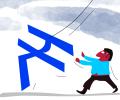
The Indian rupee experienced its sharpest single-day decline in eight weeks, settling at 94.83 per dollar, primarily due to escalating crude oil prices and persistent risk-off sentiment driven by heightened geopolitical tensions and limited foreign inflows.

A report by the University of Chicago's Energy Policy Institute projects approximately 15,800 additional heat-related deaths in India over the next six months due to the 'super El Nino' phenomenon. Globally, nearly 451,000 additional deaths are anticipated. Experts in India emphasize the need for swift action, including implementing Heat Action Plans and focusing on vulnerable populations, while also urging caution regarding model-based projections.

The Indian corporate sector demonstrated strong credit quality in the first half of FY27, driven by robust balance sheets and healthy liquidity, despite facing risks from elevated crude prices, inflation, and global interest rates.

After a significant 9.9% depreciation in FY26, the Indian rupee has shown comparative stability in the first half of FY27, depreciating by only 1.1%, attributed to regulatory interventions and measures to attract foreign capital, despite ongoing global pressures from rising crude oil prices and foreign investor outflows.

The Chintan Shivir is expected to discuss the progress of government schemes, policy implementation, time management, inter-ministerial coordination, and public service delivery, among others.

Pakistan's government is exploring measures, including potential smart lockdowns and austerity, to reduce petroleum consumption. This comes after recent fuel price hikes driven by rising global oil prices and West Asia tensions, which have also raised concerns about oil supply disruptions. The government is also implementing a fuel relief scheme and faces public pressure over the price increases.

Moody's Ratings has sharply increased India's GDP growth forecast for fiscal 2026-27 to 7 per cent, making it the fastest among G20 economies, driven by economic resilience despite the Middle East conflict. However, the agency flagged significant inflation risks stemming from elevated oil prices and potential El Nino disruptions.

India, through First Secretary Petal Gahlot, strongly criticised Pakistan at the UN General Assembly, labelling it a "puppet regime" and warning of consequences for its continued support of terrorism. This came after Pakistan Prime Minister Shehbaz Sharif raised the Kashmir issue and credited Donald Trump for intervening in a hypothetical 2025 conflict. India highlighted Pakistan's internal political issues, its history with Osama Bin Laden, and the human rights situation in Pakistan-occupied Kashmir, while also condemning its blasphemy laws and treatment of minorities.
Fitch Ratings has increased India's GDP growth forecast for the current fiscal year (FY'27) to 6.9 per cent, up from 6.4 per cent, attributing the revision to robust economic growth in the June quarter and overall economic resilience. The agency also anticipates the Reserve Bank of India (RBI) will raise interest rates by 0.25 per cent in October.

Economists widely anticipate the Reserve Bank of India's Monetary Policy Committee will increase the repo rate by 50 basis points, likely split between the October and December meetings, as retail inflation is projected to peak at 6.1 per cent in the third quarter, exceeding the RBI's tolerance limit.

The Pakistan Cricket Board (PCB) is poised for a significant overhaul under chairman Mohsin Naqvi, with anticipated changes to the national selection committee and the release of key personnel like Aqib Javed and Wahab Riaz. This comes amidst a losing streak and internal turmoil, prompting radical measures to improve the team's performance and administrative efficiency.
